

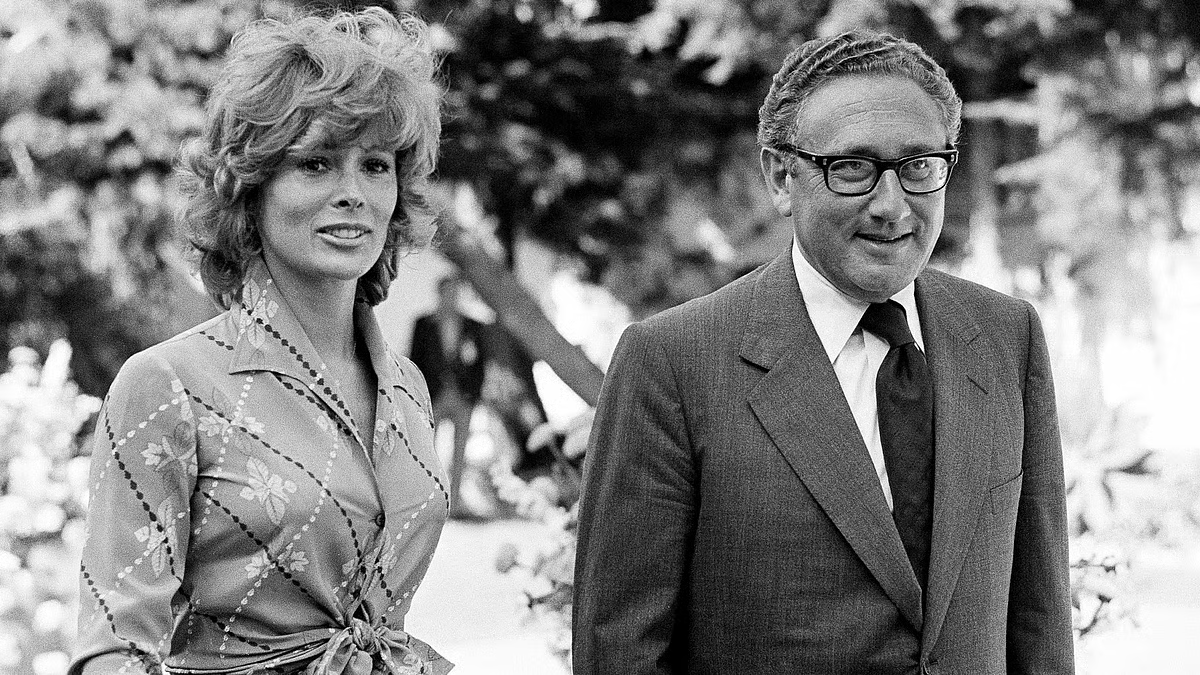
Ann Fleischer holds a unique place in American history as the first wife of Henry Kissinger, one of the most influential diplomats of the 20th century. Her story extends beyond her marriage to a famous statesman. She carved out her own identity as a mother, professional, and private individual who valued her independence. This article explores Ann Fleischer’s life, her relationship with Henry Kissinger, and her journey after their divorce.
Early Life and Background
Ann Fleischer was born in Germany during a turbulent period in European history. She came from a Jewish family that faced increasing persecution under Nazi rule. Like many Jewish families in the 1930s, the Fleischers made the difficult decision to flee their homeland. They sought safety and a new beginning in the United States.
The immigration experience shaped Ann’s character and worldview. She understood the value of freedom and opportunity in America. Her family settled into their new life, working hard to build a future in a foreign land. Ann grew up navigating two cultures. She maintained connections to her German heritage while embracing American values and customs.
Her early experiences with displacement and adaptation prepared her for the challenges she would face later in life. Ann developed resilience and independence from a young age. These qualities would serve her well throughout her personal and professional journey.
Meeting Henry Kissinger
Ann Fleischer met Henry Kissinger in the 1940s. Both shared similar backgrounds as German-Jewish immigrants who had escaped Nazi persecution. This common history created an immediate bond between them. They understood each other’s experiences in ways that others could not.
Henry Kissinger was still building his academic career when they met. He had not yet become the powerful diplomatic figure the world would later know. Ann saw potential in the young scholar. She supported his ambitions and believed in his intellectual capabilities.
Their relationship developed during a time when both were establishing themselves in their new country. They found comfort in their shared experiences and cultural background. The couple decided to marry in 1949, beginning a partnership that would last for nearly 15 years.
Marriage and Family Life
Ann Fleischer and Henry Kissinger built a life together during the early years of his academic career. They welcomed two children into their family:
- Elizabeth Kissinger – Their daughter, who would later maintain a relatively private life away from the public spotlight
- David Kissinger – Their son, who followed his father into public service and became a successful executive
As a mother, Ann dedicated herself to raising their children. She created a stable home environment while Henry pursued his increasingly demanding career. The responsibilities of parenthood fell heavily on her shoulders as her husband’s professional obligations grew.
Ann managed the household and handled many daily decisions alone. She attended school events, helped with homework, and provided emotional support to their children. Her role was traditional for the era, but it required strength and sacrifice. She often functioned as a single parent when Henry traveled for work or focused on his research.
The family dynamics shifted as Henry’s career accelerated. His work at Harvard University consumed more of his time. Ann found herself navigating the challenges of being married to an ambitious academic who was gaining national recognition.
The Challenges of Being Married to Henry Kissinger
Life as Henry Kissinger’s wife presented unique difficulties. His rising prominence in academic and political circles changed their relationship. Ann experienced the pressures that come with being married to someone in the public eye.
Henry’s work required long hours and frequent travel. He consulted for government agencies and think tanks. His schedule left little time for family life. Ann managed the home front while dealing with the loneliness of his frequent absences.
The demands of Henry’s career created strain in their marriage. Ann valued privacy and normalcy for their children. However, the increasing attention on her husband made this difficult to maintain. She struggled to balance supporting his ambitions with preserving her own identity and needs.
As Henry moved deeper into political circles, the gap between their lifestyles widened. Ann preferred a quieter, more private existence. The social obligations and public scrutiny that came with Henry’s success did not align with her personal preferences.
The Divorce
Ann Fleischer and Henry Kissinger divorced in 1964. The separation came during a pivotal time in Henry’s career. He was transitioning from academia to government service. The divorce was a significant life change for both parties.
Several factors contributed to the end of their marriage:
- The overwhelming demands of Henry’s career created emotional distance between them
- Ann’s desire for privacy conflicted with the public nature of Henry’s work
- The couple grew apart as their individual needs and goals diverged
- The strain of managing family life largely alone took its toll on Ann
The divorce process was handled with discretion. Both parties sought to minimize the impact on their children. Ann prioritized Elizabeth and David’s well-being throughout the transition. She worked to maintain stability in their lives despite the family changes.
After the divorce, Ann received custody of their children. She continued to raise them away from the intense spotlight that followed their father. This arrangement allowed the children to have a more normal upbringing during their formative years.
Life After Divorce
Ann Fleischer rebuilt her life after her marriage ended. She maintained her privacy and avoided the media attention that surrounded her ex-husband. This decision reflected her values and personality. She never sought fame or recognition based on her former marriage.
Ann pursued her own professional interests after the divorce. She worked in various capacities, though she kept details of her career largely private. Her focus remained on creating a stable environment for her children and building an independent life.
She demonstrated remarkable strength in moving forward. Many people in her position might have capitalized on their connection to a famous figure. Ann chose a different path. She built her identity separate from Henry Kissinger’s growing legacy.
Her relationship with her children remained strong throughout their lives. Elizabeth and David maintained connections with both parents. Ann ensured they had a balanced upbringing despite the complexities of having a famous father.
Ann’s Approach to Privacy
Ann Fleischer’s commitment to privacy stands out in an era of increasing media intrusion. She rarely gave interviews or made public statements. This choice protected her personal life and her children’s upbringing.
Her privacy preference contrasted sharply with the very public life her ex-husband led. Henry Kissinger became Secretary of State and a global figure. His relationships and personal life received constant media coverage. Ann remained in the background, refusing to comment on his career or their past relationship.
This discretion earned her respect from those who knew her. She did not write tell-all books or seek financial gain from her association with a powerful man. Ann maintained her dignity and integrity throughout the years.
The Impact on Her Children
Elizabeth and David Kissinger benefited from their mother’s protective approach. Ann shielded them from excessive public attention during their childhood. She gave them space to develop their own identities.
Both children went on to successful careers. David worked in business and public service. Elizabeth chose a more private path. Their mother’s influence shaped their values and character.
Ann taught her children important lessons through her example:
- The importance of maintaining personal integrity regardless of external pressures
- The value of privacy and protecting one’s personal life
- How to navigate complex family situations with grace
- The strength required to build an independent life
Her parenting approach allowed them to have relationships with both parents while developing their own paths. She never spoke negatively about their father in public, demonstrating maturity and respect.
Ann Fleischer’s Legacy
Ann Fleischer’s legacy extends beyond her role as Henry Kissinger’s first wife. She represents many immigrant women who built lives in America after fleeing persecution. Her story reflects strength, resilience, and the ability to maintain personal values in challenging circumstances.
She showed that one can be connected to history without seeking the spotlight. Ann lived on her own terms, making choices that aligned with her values rather than public expectations. This authentic approach to life deserves recognition.
Her influence on her children became part of her lasting impact. Through them, her values and character continue to shape future generations. Ann created a legacy of dignity and independence that transcends her famous connection.
Lessons from Ann Fleischer’s Life
Ann Fleischer’s journey offers valuable insights for modern readers. Her life demonstrates several important principles that remain relevant today.
First, she showed the importance of maintaining personal identity within relationships. Despite being married to an increasingly famous man, Ann never lost sight of her own needs and values. She recognized when the marriage no longer served her wellbeing and made the difficult decision to end it.
Second, Ann demonstrated that privacy is a valid choice. In our current age of social media and constant sharing, her commitment to keeping her life private seems almost revolutionary. She proved that one can live a meaningful life without public validation or attention.
Third, her story highlights the strength required to rebuild after major life changes. Divorce in the 1960s carried different social implications than it does today. Ann faced these challenges with courage and determination.
Conclusion
Ann Fleischer lived a remarkable life marked by resilience, dignity, and independence. She navigated the challenges of immigration, marriage to a prominent figure, divorce, and single parenthood with grace. Her choice to maintain privacy and build an independent life after her divorce reflects strength of character.
While many know her only as Henry Kissinger’s first wife, Ann’s story deserves recognition in its own right. She represents countless women who have supported ambitious partners while maintaining their own identity and values. Her legacy lives on through her children and the example she set for living authentically.
Ann Fleischer’s life reminds us that not everyone connected to famous figures seeks the spotlight. Some choose quiet dignity over public recognition. Her story teaches us about the importance of personal integrity, the value of privacy, and the strength required to build an independent life. These lessons remain relevant and inspiring for anyone facing major life transitions or struggling to maintain their identity in challenging circumstances.