

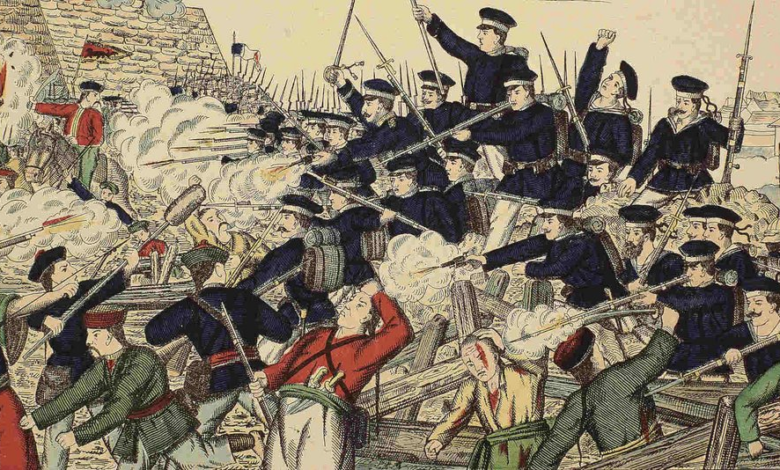
At the turn of the 20th century, a violent storm erupted across Northern China. History books call this conflict the Boxer Rebellion. It started as a grassroots peasant movement. However, it quickly grew into a massive war that changed global history.
This dramatic uprising lasted from 1899 to 1901. It pitted traditional Chinese martial artists against the world’s most powerful empires. The conflict brought a sudden end to centuries of imperial rule in China. It also set the stage for the modern Chinese nation.
Why did everyday farmers pick up swords against foreign armies? How did a secret society manage to trap global diplomats for months? This article breaks down the complete history, causes, and lasting legacy of the Boxer Rebellion.
What Was the Boxer Rebellion?
The Boxer Rebellion was a violent, anti-foreign, and anti-Christian movement in China. A secret society called the Yihetuan led the uprising. In English, this name translates to the Righteous and Harmonious Fists.
Western observers watched these rebels practice intense physical training and martial arts. Because these exercises looked like western prize-fighting, foreigners simply called the rebels “Boxers.”
The Boxers had a clear goal. They wanted to erase all foreign influence from Chinese soil. They targeted western businessmen, Christian missionaries, and foreign technology. They also attacked Chinese citizens who converted to Christianity.
"Fu-Qing, mie-yang!"
(Support the Qing Dynasty, destroy the foreigners!)
– The official rallying cry of the Boxer rebels.
Main Causes of the Boxer Rebellion
The Boxer Rebellion did not happen in a vacuum. Decades of anger, humiliation, and natural disasters pushed the Chinese peasantry to the edge.
1. Foreign Imperialism and the “Scramble for China”
During the 19th century, European powers and Japan forced China into unfair treaties. Wars like the Opium Wars stripped China of its wealth and land. Foreign nations carved China into different “spheres of interest.”
Westerners enjoyed extraterritoriality. This rule meant that foreign citizens did not have to follow Chinese laws. If a European committed a crime in China, only their own consulate could judge them. This system deeply insulted the Chinese people.
2. The Spread of Western Christianity
Christian missionaries traveled deep into the Chinese countryside. They built churches and converted local villagers. This activity disrupted traditional Chinese culture.
Many Christian converts refused to take part in local festivals or pay village taxes. Furthermore, western missionaries often used political pressure to back converts in legal disputes. Local communities felt that foreign priests were stealing their sovereignty.
3. Natural Disasters and Famine
In the late 1890s, Northern China suffered terrible hardships. The Yellow River flooded violently and ruined crops. A massive drought followed the flood. Millions of poor farmers lost their food and jobs.
Many people believed that these disasters happened because traditional spirits were angry. They blamed the presence of foreign railroad tracks, telegraph lines, and Christian churches for upsetting the natural balance of the land.
The Rise of the Righteous and Harmonious Fists
Desperate and hungry, young men in Shandong province began joining secret societies. They practiced ancient rituals, meditation, and martial arts.
The Boxers believed in supernatural protection. They claimed that spiritual possession made them completely invulnerable. They told followers that foreign bullets could not pierce their skin.
- Weapons: Most Boxers used traditional spears, long swords, and knives.
- Uniforms: They wore distinctive red sashes, turbans, and wristbands.
- Allies: A sister group called the Red Lanterns also formed. This group consisted of young women who wore red clothing and practiced martial arts to support the rebellion.
By 1899, Boxer groups started burning churches and tearing up railroad tracks. They marched through villages and executed missionaries and Chinese Christians on sight.
The Imperial Court Makes a Dangerous Choice
Initially, the ruling Qing Dynasty tried to suppress the Boxers. The imperial court feared that the rebels would overthrow the government. However, a major political shift occurred in Beijing.
The conservative Empress Dowager Cixi took full control of the government. She hated foreign interference. She realized that the Boxers possessed deep, popular energy. Instead of fighting the rebels, she decided to use them.
In June 1900, Boxer forces entered the capital city of Beijing. Empress Cixi made a stunning move. She officially endorsed the Boxers and declared war on all foreign nations in China. Imperial soldiers joined forces with the peasant rebels.
The Siege of the International Legations
The climax of the Boxer Rebellion took place in the heart of Beijing. On June 20, 1900, Boxer and imperial forces trapped hundreds of foreign diplomats, their families, and thousands of Chinese Christians. This zone was called the International Legation Quarter.
============================================================
           THE SIEGE OF BEIJING AT A GLANCE
============================================================
Duration:          55 Days (June 20 – August 14, 1900)
Defenders:         Around 900 foreign soldiers and volunteers
Attackers:         Tens of thousands of Boxers and Qing troops
Condition:         Extreme heat, scarce food, constant gunfire
============================================================
The defenders built makeshift barricades out of sandbags and furniture. They held off daily attacks from the enemy. The trapped diplomats sent urgent messages to the coast, begging for an international military rescue.
The Eight-Nation Alliance Responds
The foreign powers moved quickly to protect their citizens and financial interests. They formed a powerful coalition known as the Eight-Nation Alliance.
The alliance brought together an army of roughly 55,000 soldiers. The coalition included troops from eight specific countries:
- Japan (Sent the largest contingent of troops)
- Russia (Sent the second-largest force)
- Great Britain (Included Indian colonial troops)
- United States (Deployed soldiers and Marines from the Philippines)
- France
- Germany
- Italy
- Austria-Hungary
The alliance forces landed on the coast and fought their way inland. They captured the strategic port city of Tianjin after heavy fighting in July. From there, they marched directly toward Beijing.
The Fall of Beijing and the End of the Uprising
On August 14, 1900, the international relief force broke through the walls of Beijing. They successfully ended the 55-day siege of the legations.
When foreign troops entered the city, Empress Dowager Cixi disguised herself as a peasant. She fled the capital in a wooden cart and escaped to the distant western city of Xi’an.
The victorious alliance troops occupied Beijing. Unfortunately, the victory turned into a period of extreme violence. Foreign soldiers looted the historic Forbidden City and executed anyone they suspected of being a Boxer rebel. Historians estimate that thousands of innocent civilians died during the chaotic aftermath.
The Boxer Protocol: A Crippling Punishment
The war officially ended on September 7, 1901, with the signing of the Boxer Protocol. This treaty served as a severe punishment for China. The foreign powers forced the Qing government to accept devastating terms:
- Massive Financial Fines: China had to pay an indemnity of 450 million taels of silver. This amount exceeded the entire annual tax revenue of the empire. The government had to pay the debt over 39 years with high interest.
- Executions: The treaty required the Qing court to execute all government officials who supported the Boxers.
- Military Restrictions: The alliance banned China from importing weapons for two years. Foreign troops also won the right to station permanent military guards inside Beijing.
Historical Timeline of Key Events
| Date | Historical Event |
| 1898 – 1899 | Severe droughts and floods hit Northern China; Boxer groups form. |
| Late 1899 | Boxers launch open attacks on missionaries and Chinese Christians. |
| January 1900 | Empress Dowager Cixi officially recognizes and praises the Boxers. |
| June 13, 1900 | Boxers enter Beijing and burn churches down. |
| June 20, 1900 | The 55-day siege of the International Legations begins. |
| June 21, 1900 | The Qing Dynasty declares war on all foreign powers. |
| July 14, 1900 | The Eight-Nation Alliance captures the city of Tianjin. |
| August 14, 1900 | Alliance troops storm Beijing and lift the siege; Empress Cixi flees. |
| September 7, 1901 | The Boxer Protocol is signed, officially ending the war. |
Real-World Impact and Legacy
The Boxer Rebellion completely altered the course of global history. It had permanent effects on China and its relationship with the rest of the world.
The Collapse of the Qing Dynasty
The financial punishments of the Boxer Protocol bankrupt the Chinese government. The imperial court lost all respect and legitimacy among its citizens. Just ten years later, in 1911, the Xinhai Revolution broke out. This revolution overthrew the Qing Dynasty and ended thousands of years of imperial rule. China became a republic in 1912.
The Rise of Modern Chinese Nationalism
The rebellion marked the true birth of modern Chinese nationalism. Even though the Boxers lost the war, they proved that ordinary Chinese citizens would fight aggressively against foreign domination. Future Chinese leaders viewed the Boxers as early patriots who stood up against imperialism.
Changes in Western Foreign Policy
The conflict forced western powers to alter their strategy in Asia. They realized that completely conquering or partitioning China would create endless rebellions. The United States promoted the Open Door Policy. This policy kept China’s borders open for trade with all nations while preserving China’s official territorial integrity.
Conclusion
The Boxer Rebellion remains a powerful symbol of resistance. It highlights what happens when a population faces unbearable economic hardship, foreign oppression, and cultural erasure.
The story of the Righteous and Harmonious Fists is tragic. Their belief in magical invulnerability failed against modern machine guns and artillery. However, their desperate fight shook the world’s greatest empires to their core. By trying to expel foreign influence, the Boxers accidentally accelerated the fall of their own empire. In doing so, they cleared the path for the birth of modern China.
Frequently Asked Questions About the Boxer Rebellion
- Why were they called Boxers?Westerners called them Boxers because the members practiced traditional Chinese martial arts and shadowboxing rituals.
- Who won the Boxer Rebellion?The Eight-Nation Alliance won the war. They defeated the combined forces of the Boxers and the Chinese imperial army.
- How many people died in the conflict?The war caused massive casualties. Historians estimate that over 100,000 people died. The vast majority of the victims were Chinese civilians and Chinese Christian converts.