
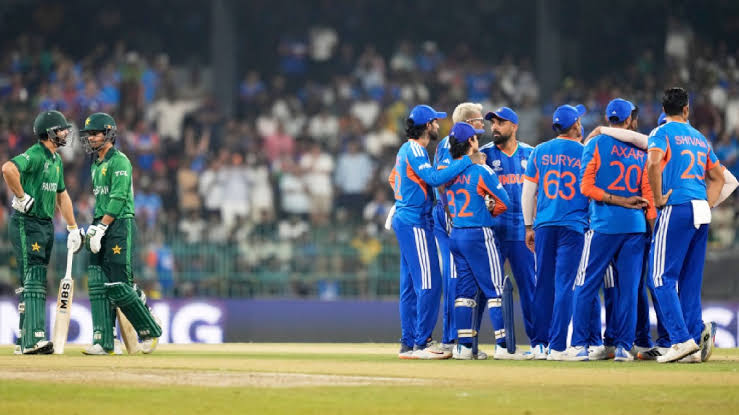
The cricketing rivalry between India and Pakistan transcends sports. It represents a clash of cultures, history, and intense national pride. Millions of fans across the globe pause their lives whenever these two giants meet on the pitch. Because political tensions restrict bilateral series, these teams now meet almost exclusively during major international tournaments.
This comprehensive india national cricket team vs pakistan national cricket team timeline explores their historic meetings, tactical shifts, and legendary clashes across the eras.
1952 – 1961: The Foundation of the Great Rivalry
The formal timeline begins shortly after the partition of the subcontinent. Pakistan received Test status in 1952 and travelled to India for their inaugural Test series.
- 1952: The two nations play their first official Test match in Delhi. India wins the match by an innings and 70 runs, eventually claiming the series 2-1.
- 1954: India tours Pakistan for the first time. The high-pressure five-match series ends in a unique 0-0 stalemate as both teams focus heavily on defensive play.
- 1960: Another five-match Test series in India finishes completely drawn. Both captains look desperate to avoid defeat, prioritizing safety over risky, aggressive strategies.
1962 – 1977: The Decades of Silence
Geopolitical conflicts brought cricket to a complete standstill between 1962 and 1977. Wars in 1965 and 1971 severed sporting ties completely. An entire generation of world-class cricketers missed out on testing their skills against their neighbors during this long gap.
1978 – 1989: The Rise of One-Day Internationals and Tragic Dramas
The historic rivalry finally resumed in 1978 when India toured Pakistan. This era marked the birth of One-Day International (ODI) cricket between the sides, changing the dynamics of the matchup forever.
Key Milestones:
- October 1, 1978: The teams play their first-ever ODI match in Quetta. India secures a tight victory by a margin of 4 runs.
- 1985: India defends a low total of 125 runs in Sharjah, bowling Pakistan out for just 87. This match establishes Sharjah as an iconic neutral venue for their games.
- 1986: Javed Miandad cements his legendary status. He hits a famous last-ball six off Indian bowler Chetan Sharma in Sharjah to win the Austral-Asia Cup for Pakistan. This single moment psychologically dominates the rivalry for years.
- 1989: A young 16-year-old batsman named Sachin Tendulkar makes his international Test debut in Karachi, facing a lethal Pakistani fast-bowling attack.
1990 – 1999: World Cup Dominance and Unforgettable Tours
The 1990s introduced a clear division in head-to-head outcomes. While Pakistan dominated standard bilateral ODI series, India established absolute control over global ICC events.
- 1992: The teams meet for the very first time in an ICC Cricket World Cup in Sydney. India wins by 43 runs, sparking a historic unbeaten streak.
- 1996: India beats Pakistan in a fiery World Cup quarter-final in Bangalore. The match features a famous heated exchange between Venkatesh Prasad and Aamir Sohail.
- 1999: Despite the active Kargil conflict, the teams play a high-pressure match at the World Cup in Manchester. India seals a clinical victory. Earlier that year, Anil Kumble achieved history by taking all 10 wickets in a single Test innings against Pakistan in Delhi.
2000 – 2011: Golden Era of Bilateral Tours and T20 Evolution
The early 2000s saw a brief period of improved diplomatic ties, known as “Cricket Diplomacy”. This allowed historic bilateral tours to take place, alongside the introduction of the T20 format.
Chronology of Major Events:
- 2004: India embarks on the historic “Friendship Tour” to Pakistan after a 15-year gap. Virender Sehwag smashes a brilliant 309 in Multan, and India captures both the Test and ODI series.
- 2007 T20 World Cup Group Stage: The sides face off in South Africa. The game ends in a tense tie. India secures the win via a dramatic, historic “bowl-out”.
- 2007 T20 World Cup Final: The rivals meet in the tournament final in Johannesburg. India wins by 5 runs in a nail-biting finish to lift the inaugural world title.
- 2011 World Cup Semi-Final: A massive global audience tunes in as India defeats Pakistan in Mohali. India goes on to win the World Cup trophy shortly after.
The tragic 2008 Mumbai attacks officially brought regular bilateral cricket tours to an end. 2007 remains the last time the sides played a traditional bilateral Test series.
2012 – 2019: ICC Clashes and Shifting Balances
Without bilateral tours, matches became rarer, turning global ICC events into must-watch spectacles.
- 2015 World Cup: India continues its flawless run, defeating Pakistan by 76 runs in Adelaide.
- 2017 Champions Trophy Final: Pakistan exacts revenge on the grandest stage. Fakhar Zaman hits a brilliant century, leading Pakistan to a massive 180-run victory to lift the title.
- 2019 World Cup: Rohit Sharma masterminds a dominant win for India, scoring a magnificent 140 runs in Manchester.
2021 – 2026: Modern Masterclasses and a New Era
The modern timeline features tactical precision, extreme fitness standards, and unpredictable T20 thrillers across the globe.
- October 24, 2021 (The Streak Broken): Pakistan beats India for the first time ever in an ICC World Cup event during the T20 World Cup in Dubai. Shaheen Afridi wrecks the top order, and Babar Azam pairs with Mohammad Rizwan to chase down the target with a flawless 10-wicket victory.
- October 23, 2022 (The Melbourne Miracle): Over 90,000 screaming fans fill the Melbourne Cricket Ground. Chasing a tough total, Virat Kohli plays an iconic, legendary innings of 82*. His twin sixes against Haris Rauf pull off a miraculous victory from the jaws of defeat.
- June 9, 2024 (Nassau County Thriller): The rivalry travels to New York for the T20 World Cup. On a highly unpredictable pitch, India defends a low total of 113. Jasprit Bumrah puts on a masterclass in defensive bowling to seal a thrilling 6-run win.
- February 23, 2025 (Champions Trophy Battle): The teams battle fiercely during the ICC Champions Trophy group stage in Dubai. Virat Kohli plays a classic anchor innings, scoring crucial runs to guide India safely to a comfortable 6-wicket win.
- February 15, 2026 (Colombo T20 Dominance): The rivals cross paths at the Men’s T20 World Cup in Colombo. Ishan Kishan blasts an aggressive 77 off just 40 balls. India’s bowling attack limits Pakistan to 114 runs, securing an emphatic 61-run win.
Statistical Breakdown: Head-to-Head Records
Looking at the numbers reveals how competitive this historic rivalry remains across different formats. While Pakistan holds the advantage in traditional, longer formats, India dominates the modern shorter formats and World Cups.
| Format | Total Matches | India Wins | Pakistan Wins | No Result / Draws |
| Test Matches | 59 | 9 | 12 | 38 |
| One-Day Internationals (ODI) | 136 | 58 | 73 | 5 |
| Twenty20 Internationals (T20I) | 17 | 14 | 3 | 0 |
| Overall Head-to-Head | 212 | 81 | 88 | 43 |
Strategic Evolution of the Rivalry
The technical nature of these games has evolved dramatically over the dynamic india national cricket team vs pakistan national cricket team timeline.
- The Bowling vs Batting Era (1980s – 2000s): This classic period pitted India’s world-class, elegant batting lineup directly against Pakistan’s hostile, explosive fast-bowlers. Indian legends like Sunil Gavaskar and Sachin Tendulkar frequently traded blows with fearsome pacers like Imran Khan, Wasim Akram, and Waqar Younis.
- The Spin and Fitness Revolution (2010s): India adapted rapidly to modern sports science, emphasizing elite athletic fitness, dynamic fielding, and lethal spin bowling variations. High athletic standards transformed India into a highly efficient team under pressure.
- The High-Speed T20 Landscape (Modern Era): Matches now prioritize data-driven strategies, clever variations in the death overs, and power-hitting lower in the order. Players must handle intense psychological pressure alongside demanding physical conditions.
The india national cricket team vs pakistan national cricket team timeline proves that this encounter is far more than an ordinary game of cricket. It remains a historical phenomenon that grips the sporting world, writing new emotional chapters with every single ball bowled.