Master Your Gaming Setup: The Complete Guide to Connectivity HSSGamepad Features

Modern gaming demands speed, precision, and zero lag. Whether you play on a PC, console, or mobile phone, your controller connection matters. The term connectivity hssgamepad refers to the high-speed connectivity systems used in advanced modern gamepads. These systems ensure that every button press happens instantly on your screen.
In this guide, you will learn everything about setting up, troubleshooting, and optimizing your gamepad connection. We will break down complex tech concepts into plain English so you can get back to gaming faster.
Why Connection Speed Matters for Gamers
When you play competitive games, every millisecond counts. A slow wireless connection creates input delay. Input delay causes your character to jump or shoot late. Fast connectivity fixes this issue and gives you a real advantage over your opponents.
Here is what great controller connectivity delivers:
- Instant Reaction Times: Your actions happen on screen without delay.
- Stable Connection: You avoid sudden disconnects during intense matches.
- Better Precision: Smooth analog stick movement helps your aim in shooter games.
- Multi-Device Support: You can switch between your PC, phone, and console easily.
How to Connect Your Gamepad: Step-by-Step
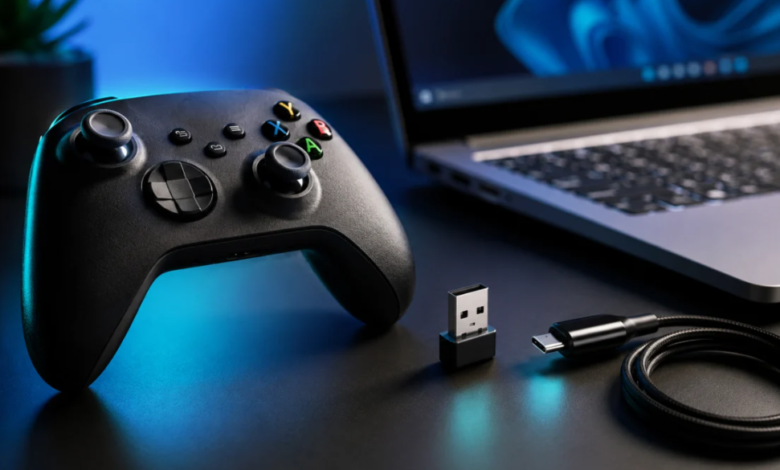
Setting up your connectivity hssgamepad profile depends on the wireless method you choose. Most modern controllers give you three main options: Bluetooth, 2.4GHz Wireless USB Dongle, and Wired USB Cable.
1. Bluetooth Connection (Best for Mobile & Laptops)
Bluetooth offers convenience because you do not need extra adapters.
- Turn on your gamepad.
- Hold the pairing button until the light flashes rapidly.
- Open Bluetooth settings on your phone, tablet, or PC.
- Select your gamepad from the list of available devices.
- Wait for the light to stay solid. Your device is now connected.
2. 2.4GHz USB Dongle Connection (Best for PC Gaming)
A dedicated USB receiver provides a stronger signal than standard Bluetooth.
- Plug the 2.4GHz USB receiver into an open USB port on your PC.
- Turn on your controller.
- Press the connect button on the USB dongle if needed.
- The gamepad will automatically pair within a few seconds.
3. Wired USB Connection (Best for Competitive Play)
A direct wire completely eliminates wireless interference.
- Connect a USB-C cable to your controller.
- Plug the other end directly into your PC or console.
- The system will detect the controller instantly without pairing.
Understanding Wireless Protocols: Bluetooth vs. 2.4GHz
Gamers often ask whether they should use Bluetooth or a 2.4GHz wireless adapter. Both options have unique pros and cons.
| Feature | Bluetooth Connection | 2.4GHz USB Adapter |
| Setup | Easy (No dongle required) | Simple (Requires USB port) |
| Input Lag | Moderate (~10ms – 20ms) | Very Low (~1ms – 4ms) |
| Battery Life | Longer battery savings | Slightly higher power draw |
| Compatibility | PC, iOS, Android, Switch | PC, Laptops, Consoles |
| Range | Up to 30 feet | Up to 30 feet (more stable) |
If you play fast-paced multiplayer games, use the 2.4GHz dongle or a wired connection. If you play casual games on your mobile phone, Bluetooth is the most convenient choice.
How to Fix Common Connection Issues
Sometimes your wireless signal drops or lags. Do not worry—most connection problems are easy to fix. Follow these practical troubleshooting steps to resolve connectivity hssgamepad issues quickly.
Fix Input Delay and Lag
- Move Closer: Sit closer to your wireless receiver or screen.
- Remove Obstacles: Clear the line of sight between your controller and the PC.
- Avoid USB 3.0 Interference: Unplug external hard drives that sit right next to your USB dongle. USB 3.0 ports can interfere with 2.4GHz wireless signals.
- Use a USB Extension Cable: Plug your wireless dongle into a USB extension cord and place it on your desk near your gamepad.
Fix Pairing Failures
- Charge the Battery: Low battery power causes weak wireless pairing. Charge your controller fully.
- Clear Old Connections: Go to your device settings and click “Forget Device.” Pair the gamepad again from scratch.
- Restart Your System: Reboot your PC, console, or smartphone to reset the wireless drivers.
Update Controller Firmware
Manufacturers release software updates to improve signal stability. Check the manufacturer website or companion app regularly to keep your controller software up to date.
Key Features to Look for in a Gaming Controller
When buying a new controller, look for features that boost wireless stability and performance:
- Dual-Mode Connectivity: Look for controllers that offer both Bluetooth and 2.4GHz wireless options.
- Hall Effect Thumbsticks: These sensors use magnets instead of mechanical parts. They prevent stick drift and maintain accurate inputs.
- Long Battery Life: Choose a gamepad with at least 15–20 hours of play time per charge.
- Rechargeable Battery: Built-in lithium-ion batteries are more convenient than disposable AA batteries.
- Low Latency Mode: Many modern devices include a dedicated low-latency mode for competitive gaming.
Best Practices for Maintaining Wireless Performance
To keep your controller working smoothly for years, follow these simple maintenance habits:
- Charge regularly: Never let the battery sit at zero percent for long periods.
- Store safely: Keep your gamepad in a dry place away from heat and direct sunlight.
- Clean the ports: Dust inside the USB-C port can prevent fast wired charging. Clean it gently with a dry cotton swab.
- Turn off unused devices: Turn off extra Bluetooth devices nearby to reduce signal clutter.
Final Thoughts
A stable connection forms the foundation of great gaming experiences. By choosing the right wireless mode, keeping your firmware updated, and reducing signal interference, you will maximize your connectivity hssgamepad setup.
Pick your preferred connection method, plug in, and enjoy lag-free gaming today!