
Backlighting at the Shore: How to Create Dreamy Coastal Silhouettes and Lens Flare

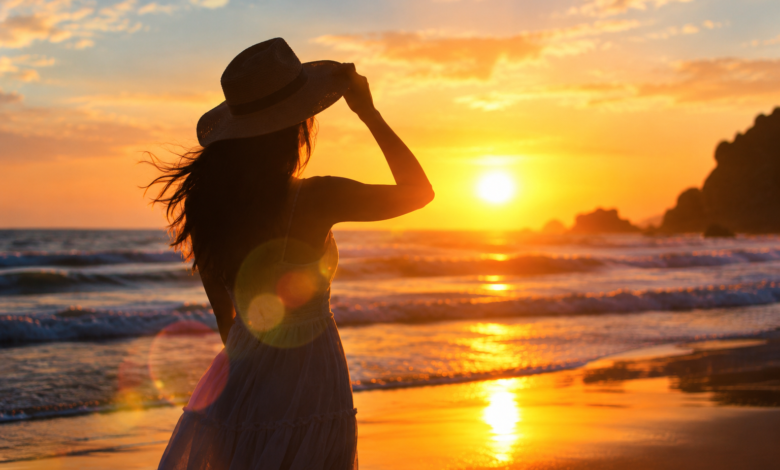
The ocean location offers an ideal environment for outdoor photographic shoots. Light produced by sunshine coming from behind the photographer results in a bright photo background, while sunlight coming from above provides a totally different effect. Backlight makes an ordinary beach view look like something out of a fairy tale, with golden rims, pitch-black shadows, and a space atmosphere.
Backlit by water is mastered through knowledge about lighting levels, position of sunlight and weather patterns. Scenic photographers like Alys Beach photographer who capture golden hour shots of Florida’s Gulf Coast are skilled at using such light manipulation skills to turn harsh sun rays into beautiful paintings. To improve your shots of beaches by changing angle and exposure on a camera.
1. Crafting Ethereal Lens Flare
A lens flare is an effect where light from a bright source passes through to the front surface of your camera lens, resulting in colored glare on screen. Lens flares are controlled for adding warmth and an ethereal, nostalgic feel to beach photos.
- Position the Sun Near the Frame Edge: Position it slightly within or beyond an image frame so as not to overpower a photograph by creating some amount of blurring effect on its surface while still allowing enough light through for proper exposure.
- Taking off the lens hood: It is important to take off the lens hood because it serves the purpose of blocking unwanted stray light, which means removing it allows that unwanted light to enter through the front surface of a camera sensor or film plane.
- Tuning the aperture: The extensive aperture range (f, 1.8 – f, 2.8) creates soft, dreamy haze, while the narrow aperture range (f, 11 – f, 16) changes the sun into a pointy starburst.
| Aperture Setting | Visual Flare Effect | Ideal Subject Application |
| f/1.8 – f/2.8 | Soft, washed-out golden haze and circular bokeh | Romantic couples portraits, candid beach moments |
| f/4.0 – f/5.6 | Balanced contrast with gentle light streaks | Family lifestyle shots, environmental portraits |
| f/11 – f/16 | Sharp, defined starbursts and intense contrast | Dramatic coastal landscapes, horizon shots |
2. Step-by-Step Guide to Creating Coastal Silhouettes
The backlit silhouettes technique can be achieved using a strong backlight and making sure that there’s high contrast between the subject and the background.
- Shoot at Low Angles of the Sun: The best time to take photographs utilizing the backlighting effect is during the golden hour, in its last 30 minutes, or at twilight – when the sun is near the horizon.
- Select a Clear Horizon Backdrop: Find an expanse with either a blue and clear sky or blue water and white sand where there are no trees, bushes, or any other things that could potentially cast shadows.
- Set Camera for the Sky: Activate the spot metering on your camera and take a reading of the brightest part of the sky near the sun.
- Differentiate Your Subjects: Each subject should be spaced out so that there is no overlapping of people when they become silhouettes due to the backlighting.
3. Managing Coastal Reflections and Atmosphere
Natural reflectors on a beach help to improve backlight photography. The sea spray floating on top of the water reflects light to create an ethereal haze; meanwhile, wet sand at the shore serves like a giant mirror reflecting it onto itself.
Being part of this project helps me understand that using water reflection for backlight compositions is better than working alone as a professional Alys Beach photographer. Sea mist, tidal line reflections, and low-angle sunlight create an authentic, timeless image of nature.
Conclusion
The illuminated shoreline creates many options for scenery, including black-and-white, distorted pale colors of the fictional sea beach. Taking pictures when the sun is lower in the sky, using different lens openings, and getting shots on the bright sky give great chances for artistic work in challenging lighting. The artistic way to take the shot is to gather sunlight directly in order to film the beauty of the place.