Rupali Chakankar: Biography, Political Career, Women’s Rights Work, and Public Life

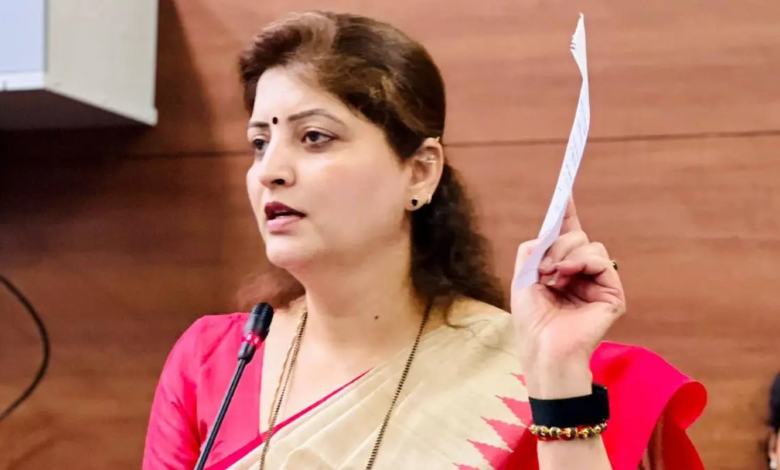
Rupali Chakankar is a prominent Indian political leader from Maharashtra who has been closely associated with women’s rights, social work, and the Nationalist Congress Party. Her public career has attracted attention because of her leadership roles, outspoken political style, and work connected with the Maharashtra State Commission for Women.
Her journey from grassroots social work to an important position in Maharashtra politics is also notable. She became widely known after taking charge as chairperson of the Maharashtra State Commission for Women in 2021. Official records from the commission confirm her role during the 2022–23 period.
In 2024, she was again appointed to the position for another term. Her career later faced major controversy in 2026, when questions surrounding her association with Ashok Kharat led to intense political criticism and her resignation from the women’s commission.
This detailed profile looks at her background, education, political journey, work for women, leadership roles, family information available in public sources, and the major developments that shaped her public career.
Who Is Rupali Chakankar?
Rupali Chakankar is a Maharashtra-based politician and social worker associated with the Nationalist Congress Party. She became a familiar name in state politics through her work with women’s organizations and her leadership of the party’s women’s wing.
She also served as chairperson of the Maharashtra State Commission for Women. The commission is a statutory body created under Maharashtra Act No. XV of 1993. Its responsibilities include improving the status and dignity of women, examining practices that harm women, monitoring laws affecting women, and providing counselling and free legal advice to women who need assistance.
Her position therefore placed her at the center of several discussions involving women’s safety, legal rights, gender equality, and social issues.
Early Life and Background
Public reports state that Chakankar was born in Maharashtra and has roots in the Daund area of Pune district. Reports describe her as coming from a farming family. She received her early education in the Pune region and studied at Sadhana College, associated with the Rayat Shikshan Sanstha.
Before entering mainstream politics, she was interested in public service and reportedly prepared for competitive examinations because she wanted to become an officer.
Her early experiences helped shape her interest in community work. Reports also say that she spent several years working with women’s self-help groups. This grassroots experience became an important part of her later political identity.
Quick Profile
| Category | Information |
|---|---|
| Name | Rupali Chakankar |
| Birthplace | Pune region, Maharashtra |
| Political association | Nationalist Congress Party |
| Main public role | Maharashtra State Commission for Women chairperson |
| Education | Reported to have pursued higher studies, including MBA |
| Early work | Social and community activities |
| Political focus | Women’s issues and social concerns |
| State | Maharashtra, India |
Some biographical details reported online differ slightly between sources, especially regarding her exact date of birth and education timeline. For that reason, those details should be treated carefully unless confirmed by an official record.
Education and Early Ambitions
Education played an important role in Chakankar’s early life. Reports state that she studied at Sadhana College and later pursued higher education. Some recent biographical reports describe her as having completed an MBA.
Her early ambition was reportedly to enter government service. She prepared for competitive examinations and considered an administrative career.
However, her professional path eventually moved toward social work and politics.
That shift allowed her to work directly with people and community groups. Her experience with women’s self-help groups also gave her exposure to everyday problems faced by women in rural and semi-urban communities.
Entry Into Politics
Rupali Chakankar’s entry into politics was influenced by her connection with the Chakankar family after marriage. Public reports say that her mother-in-law, Rukmini Chakankar, had been a corporator associated with the Nationalist Congress Party. This connection helped introduce her to the political environment.
She gradually became active in organizational work.
Her political development did not happen overnight. She worked at the grassroots level before taking on larger responsibilities within the party.
Her journey included local political responsibilities and later leadership of the party’s women’s organization.
Her Political Growth
Her rise can be broadly understood through several stages:
- Community and social work
- Work with women’s self-help groups
- Local political involvement
- Leadership responsibilities within the NCP
- State-level women’s wing leadership
- Appointment to the Maharashtra State Commission for Women
This gradual rise helped her build a recognizable political identity in Maharashtra.
Role in the Nationalist Congress Party
Chakankar became an important leader in the women’s wing of the Nationalist Congress Party. She was known for defending the party’s position in public discussions and responding strongly to political opponents.
Her leadership of the women’s organization increased her visibility across Maharashtra.
She often spoke about issues involving women, social justice, political representation, and public safety. Her direct style also made her a recognizable figure in television debates and political discussions.
Her work within the party gave her a platform beyond local politics and helped establish her as a state-level leader.
Maharashtra State Commission for Women
One of the most important chapters in Chakankar’s career began in 2021, when she was appointed chairperson of the Maharashtra State Commission for Women.
The commission plays an important role in addressing concerns affecting women across the state. Its official responsibilities include legal awareness, counselling, monitoring laws, research, and recommendations to the government.
National Commission for Women records also list Rupali Chakankar as the chairperson representing Maharashtra in the state commissions directory.
Her tenure brought her into contact with many issues involving women’s rights and social welfare.
Work Related to Women’s Rights
During her tenure, Chakankar participated in programs related to gender equality, legal awareness, and women’s safety.
A documented example comes from an educational program held in 2022. Chakankar addressed students on gender sensitization and gender equality and discussed the role of the Maharashtra State Commission for Women. She emphasized the importance of teaching gender equality from an early stage.
The commission itself also conducts legal literacy workshops and works with non-governmental organizations on women’s issues.
This work highlights an important part of Chakankar’s public role: connecting institutional support with awareness at the community level.
Areas Associated With Her Public Work
Her public responsibilities included issues such as:
- Women’s safety
- Legal awareness
- Gender equality
- Domestic and social concerns
- Access to counselling
- Support for women facing difficulties
- Awareness of laws protecting women
- Coordination with social organizations
These issues remain important across Maharashtra because many women still face barriers when seeking legal, social, or institutional support.
Reappointment in 2024
Chakankar continued to remain an important figure in Maharashtra politics after her first term.
Reports published in 2024 stated that she was reappointed as chairperson of the Maharashtra State Commission for Women. Her continuation reflected the political importance of her position and her standing within the NCP structure.
Her leadership during this period continued to attract both support and criticism.
Like many political figures holding a high-profile public position, she faced scrutiny from political opponents, media organizations, and members of the public.
Public Speaking and Political Style
Rupali Chakankar developed a reputation for speaking directly and defending her political position strongly.
Reports have described her as an assertive speaker who responds firmly to criticism.
This style helped her gain recognition among supporters. At the same time, it also made her a frequent subject of political debate.
Her public image has therefore included two major sides: a leader associated with women’s issues and a party politician who actively participates in political arguments.
Controversy and Resignation in 2026
The most significant recent development in Chakankar’s public career came in March 2026.
She faced intense scrutiny over her association with Ashok Kharat, a controversial figure who was facing serious criminal allegations. Political opponents questioned her connection with him, while the issue received widespread media attention.
According to reports, Chakankar met Maharashtra Chief Minister Devendra Fadnavis during the controversy and subsequently resigned from the chairperson position of the Maharashtra State Commission for Women.
It is important to distinguish allegations against another individual from established facts about Chakankar herself. Media reports described political criticism and questions about her association, but those claims should not automatically be treated as findings of wrongdoing.
The controversy became a major turning point in her public career.
Why the Maharashtra State Commission for Women Matters
Understanding Chakankar’s career also requires understanding the institution she led.
The Maharashtra State Commission for Women was established to protect and promote women’s rights. It can examine issues affecting women, recommend measures to the government, monitor the implementation of laws, and provide support through counselling and legal advice.
Its work can be especially important for women who do not know where to seek help.
The commission also works with NGOs and conducts awareness programs. These activities can help women understand their legal rights and available support systems.
Rupali Chakankar’s Public Image
Chakankar has built a public identity around three broad areas:
Grassroots Work
Her reported experience with women’s self-help groups gave her an early connection with community-level issues.
Political Leadership
Her rise through the NCP women’s organization established her as a recognizable state-level politician.
Women’s Rights
Her chairpersonship of the Maharashtra State Commission for Women placed women’s safety, legal awareness, and gender equality at the center of her public responsibilities.
These three areas explain why her name became widely known beyond her original political base.
Family and Personal Life
Publicly available reports identify her husband as Nilesh Chakankar and state that the couple has a son. Some reports also identify her parents as Babanrao Borate and Parvati Borate.
Because family information about public figures can vary between online sources, it is better to rely on information that has been consistently reported rather than unverified personal claims.
Chakankar has generally remained better known for her political and social activities than for her private life.
Career Timeline
| Period | Major development |
|---|---|
| Early years | Education and interest in public service |
| Early adulthood | Community and women’s social work |
| Later period | Entry into political activities |
| 2021 | Appointed chairperson of Maharashtra State Commission for Women |
| 2022–23 | Official commission records list her as chairperson |
| 2024 | Reported reappointment to the commission |
| March 2026 | Resigned amid controversy surrounding her association with Ashok Kharat |
The timeline shows how quickly her public responsibilities expanded from grassroots work to a prominent state-level position.
Impact on Maharashtra Politics
Rupali Chakankar’s career reflects the growing role of women leaders in Maharashtra’s political organizations.
Her rise also demonstrates how grassroots work can provide a foundation for political leadership. Women’s self-help groups, community organizations, and local political networks often give leaders direct exposure to social problems.
Her career also shows the pressure that comes with holding a high-profile public office. Leaders who work on sensitive social issues often face strong political scrutiny.
Frequently Asked Questions
Who is Rupali Chakankar?
Rupali Chakankar is a Maharashtra politician and former chairperson of the Maharashtra State Commission for Women. She has also held a leadership role in the women’s wing of the Nationalist Congress Party.
What is Rupali Chakankar known for?
She is mainly known for her political work, leadership of the NCP women’s organization, and role as chairperson of the Maharashtra State Commission for Women.
When did she become chairperson of the Maharashtra State Commission for Women?
She first became chairperson in 2021. Official commission records list her as chairperson during the 2022–23 period.
Was she reappointed?
Yes. Reports from 2024 stated that she was reappointed to the position.
Why did she become controversial in 2026?
She faced criticism over her association with Ashok Kharat amid serious allegations against him. The controversy led to intense political scrutiny and her resignation from the commission in March 2026, according to multiple reports.
What does the Maharashtra State Commission for Women do?
The commission works to improve women’s status and dignity, monitors laws affecting women, examines practices harmful to women, advises the government, and provides counselling and legal assistance.
Final Thoughts
Rupali Chakankar’s journey is a notable example of a Maharashtra political career built through grassroots involvement, organizational leadership, and public advocacy. Her work with women’s groups helped shape her early public identity, while her role in the Nationalist Congress Party brought her into state-level politics.
Her appointment as chairperson of the Maharashtra State Commission for Women became the most prominent stage of her career. In that role, she was involved in discussions and programs concerning women’s safety, legal awareness, gender equality, and social welfare. Official records confirm her leadership of the commission during the 2022–23 period.
Her resignation in 2026 marked a major change in her public career. The controversy surrounding her association with Ashok Kharat generated substantial political and media attention. At the same time, responsible reporting requires separating verified facts from political allegations and claims made during a heated controversy.
Overall, Chakankar remains a significant name in the recent political history of Maharashtra, particularly in discussions surrounding women’s leadership, social work, party organization, and the role of state institutions dedicated to women’s rights.