Oregon State Baseball: History, 2026 Season, Players, Schedule and Program Overview

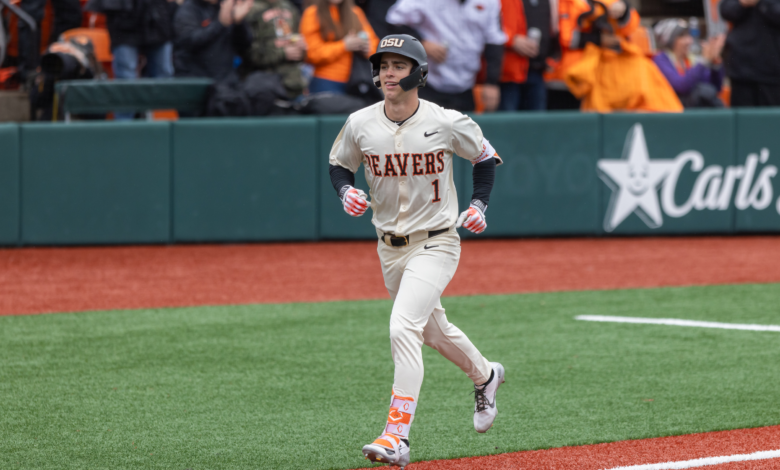
Oregon State baseball has built one of the strongest traditions in college baseball. The Oregon State Beavers compete at Oregon State University in Corvallis, Oregon, and play their home games at Goss Stadium at Coleman Field. The program has produced national champions, All-Americans, MLB players, and teams that regularly compete deep into the NCAA Tournament.
The Beavers entered the 2026 season with another strong team and continued their impressive run under head coach Mitch Canham. Oregon State finished the 2026 campaign with a 45-14 record and reached the NCAA Tournament for the ninth consecutive season. The Beavers also reached their fifth straight regional final before their season ended against rival Oregon in Eugene.
This guide covers the history of Oregon State baseball, its championship success, the 2026 season, coaching staff, team statistics, important players, schedule, home stadium, and what makes the program so respected in college baseball.
Oregon State Baseball at a Glance
| Category | Information |
|---|---|
| School | Oregon State University |
| Team | Oregon State Beavers |
| Sport | College baseball |
| Location | Corvallis, Oregon |
| Home stadium | Goss Stadium at Coleman Field |
| Head coach | Mitch Canham |
| 2026 record | 45-14 |
| 2026 home record | 21-6 |
| 2026 away record | 15-3 |
| 2026 neutral record | 9-5 |
| National championships | 2006, 2007, 2018 |
| College World Series appearances | 8 |
| NCAA Super Regional appearances | 10 |
| NCAA Regional appearances | 24 |
Oregon State’s official historical records list three national championships, eight College World Series appearances, ten NCAA Super Regional appearances, and 24 NCAA Regional appearances.
A Proud History of Oregon State Baseball
The Oregon State baseball program dates back more than a century. Over time, the Beavers developed from a regional college team into a national power.
The program’s modern success is closely connected with Pat Casey, who led Oregon State to three national championships. The Beavers won their first NCAA title in 2006 and repeated as national champions in 2007. They then returned to the top of college baseball in 2018.
The 2006 and 2007 championships changed the national perception of the program. Oregon State was no longer simply a competitive team from the Pacific Northwest. It had become a legitimate national powerhouse.
The program’s historical records also show the remarkable 2017 team, which finished 56-6, and the 2018 championship team, which finished 55-12-1.
The 2006 National Championship
The 2006 season remains one of the most important years in Oregon State baseball history.
Pat Casey guided the Beavers to a 50-16 record and the program’s first national championship. The title established Oregon State as one of the country’s elite baseball programs.
The 2007 Repeat
Oregon State followed its first championship with another remarkable season in 2007.
The Beavers finished 49-18 and captured a second straight national championship. Winning back-to-back NCAA titles gave the program a special place in college baseball history.
The 2018 Championship
Oregon State returned to the top in 2018. The Beavers finished 55-12-1 and won their third national championship.
That championship showed that the program’s earlier success was not a short-term achievement. Oregon State had established a sustainable baseball culture capable of competing with the best teams in the country.
Mitch Canham and the Modern Era
Mitch Canham became Oregon State’s head coach in June 2019. He already had a strong connection with the program because he played for the Beavers and was part of the championship era.
Canham was a 2007 All-American and helped Oregon State reach Omaha three times as a player. He later gained professional baseball and managerial experience before returning to Corvallis as head coach.
His teams have continued the program’s winning tradition.
Under Canham, Oregon State reached the postseason repeatedly and maintained a high level of consistency. His tenure has included several 40-win seasons and regular NCAA Tournament appearances.
The 2026 season was another major achievement. The Beavers finished 45-14, reached the postseason for a school-record ninth consecutive season, and advanced to the regional final.
Oregon State Baseball 2026 Season
The 2026 Oregon State baseball season was filled with strong wins and several difficult tests.
The Beavers began the year away from Corvallis. Their early schedule included games against Michigan, Arizona, Stanford, Baylor, Southern Miss, Purdue, Houston, Alabama, and Iowa.
Oregon State then played a demanding series of road games before returning home for the opening series at Goss Stadium.
The final record was 45-14, giving Oregon State a .763 winning percentage. The team went 21-6 at home, 15-3 away, and 9-5 at neutral sites.
Strong Team Numbers
The Beavers’ overall statistics show why they were so successful.
| Team statistic | Oregon State |
|---|---|
| Record | 45-14 |
| Batting average | .274 |
| OPS | .806 |
| Runs | 391 |
| Hits | 542 |
| RBI | 360 |
| Doubles | 117 |
| Home runs | 55 |
| Walks | 279 |
| Stolen bases | 52 |
| WHIP | 1.14 |
| Strikeouts by pitchers | 699 |
| Fielding percentage | .985 |
Oregon State scored 391 runs while allowing 216. The Beavers also posted a .274 batting average, a .806 OPS, a 1.14 WHIP, and a .985 fielding percentage.
These numbers show balance. Oregon State was not dependent on one part of the game. The team combined hitting, pitching, defense, and aggressive baserunning.
A Strong Offense
The Oregon State lineup produced 542 hits and 391 runs during the 2026 season.
The team also hit 55 home runs and 117 doubles. Those numbers demonstrate a lineup that could create runs in different ways.
Oregon State’s .274 batting average was significantly higher than its opponents’ .213 mark. The Beavers also finished with a .422 slugging percentage compared with .319 for opponents.
That offensive balance helped Oregon State compete even when games became difficult.
Paul Vazquez
Paul Vazquez was one of the notable offensive players during the 2026 season.
According to Oregon State, Vazquez became an everyday starter after making only limited appearances as a freshman. He finished 2026 with a .296 batting average, 58 hits, 12 doubles, eight home runs, 36 RBI, and an .867 OPS over 53 starts.
His development was an important part of the Beavers’ lineup.
Oregon State’s Pitching Staff
Pitching was another major strength for Oregon State.
The Beavers finished the season with 699 strikeouts and a 1.14 WHIP. Opposing teams hit only .213 against the Oregon State staff.
Those numbers helped the Beavers remain competitive throughout the season.
Trey Morris was one of the important arms during the NCAA Regional. Against Washington State, Morris worked 6⅔ innings and struck out nine while allowing only one run. Oregon State won that game 10-1.
Wyatt Queen also delivered a strong performance in the final regional game against Oregon. He struck out seven over 4⅔ innings and allowed one run on four hits.
2026 NCAA Tournament Run
Oregon State entered the NCAA postseason after another successful regular season.
The Beavers opened regional play against Washington State and lost a close 3-2 game. Instead of ending their tournament run, Oregon State responded with consecutive wins.
The Beavers defeated Yale 9-2 and then beat Washington State 10-1 to reach the regional final.
The final game created an all-Oregon matchup.
Oregon State vs. Oregon
Oregon State faced Oregon on May 31, 2026, in Eugene.
The Beavers scored first in the second inning, but Oregon later took control and won 4-1. Oregon State finished the season with a 45-14 record.
Although the loss ended the season, Oregon State had still reached the regional final for the fifth consecutive year. That level of consistency highlights the strength of the program under Canham.
Important Players to Watch
Oregon State’s roster features players across different classes and positions.
The official 2026 roster included veterans and younger players such as Isaac Yeager, Cooper Vance, Nyan Hayes, Adam Haight, Paul Vazquez, Zach Kmatz, and others. The roster also included players from several states and international backgrounds.
A college baseball team’s success depends on more than one star. Oregon State’s 2026 season showed the importance of depth.
Isaac Yeager
Right-handed pitcher Isaac Yeager was an important part of the pitching staff. He finished the 2026 season with a 6-2 record according to the final box score from the NCAA Regional matchup against Oregon.
Jacob Galloway
Catcher Jacob Galloway delivered a standout performance during Oregon State’s 10-1 NCAA Regional victory over Washington State.
Galloway went 4-for-4 and drove in five runs. He also stole a base. His performance helped Oregon State build a large early lead and advance to the regional final.
Goss Stadium at Coleman Field
Goss Stadium at Coleman Field is the home of Oregon State baseball in Corvallis.
The stadium provides the Beavers with a strong home-field environment. In 2026, Oregon State went 21-6 at home.
The home schedule included series against Xavier, Mercer, Cal Poly, Cal State Fullerton, Hawaii, UTRGV, CSUN, and Air Force, along with other games.
Oregon State opened its 2026 home schedule against Xavier in March. The Beavers won all four games in that series, including a 17-2 victory in the third game.
2026 Schedule Highlights
Oregon State’s schedule included opponents from different parts of the country.
Some notable games included:
- Michigan in the opening weekend
- Arizona and Stanford in Surprise, Arizona
- Baylor, Southern Miss, and Purdue in Round Rock
- Houston, Alabama, and Iowa in Frisco
- Oregon in Eugene
- Xavier at Goss Stadium
- San Diego on the road
- UC Irvine on the road
- USC in Los Angeles
- Washington and Oregon at home
- Long Beach State on the road
- Air Force at home
- Washington State in the NCAA Regional
- Oregon in the NCAA Regional final
The schedule gave Oregon State plenty of opportunities to face quality competition before postseason play.
Oregon State Baseball and MLB
The Beavers have also developed many players who reached professional baseball.
Oregon State’s official historical records include MLB draft selections such as Adley Rutschman, Michael Conforto, Jacoby Ellsbury, Trevor Larnach, Drew Rasmussen, and many others.
This professional pipeline adds another important dimension to the program.
Players develop their skills at Oregon State and then have opportunities to continue their careers in professional baseball. The combination of coaching, competition, facilities, and a winning culture makes the program attractive to talented players.
What Makes Oregon State Baseball Successful?
Several factors help explain the Beavers’ long-term success.
Strong Coaching
Oregon State has benefited from experienced coaches who understand how to build competitive teams.
Mitch Canham has continued that tradition while bringing his own approach to the program. His coaching staff includes former Oregon State players and baseball professionals.
Player Development
The program focuses on developing players rather than depending only on highly rated recruits.
Paul Vazquez is a good example. His progression from limited freshman action to an everyday role in 2026 demonstrates how development can influence a team’s success.
Strong Pitching
Oregon State’s 2026 pitching statistics were among the strongest areas of the team. A 1.14 WHIP and 699 strikeouts show how effectively the staff limited opposing offenses.
Consistent Postseason Experience
Experience matters in college baseball. Oregon State reached the NCAA postseason for the ninth consecutive season in 2026. The Beavers also reached their fifth straight regional final.
That experience gives players confidence when the pressure increases in postseason games.
Future of Oregon State Baseball
The program remains focused on maintaining its national standing.
One notable change after the 2026 season was the addition of former Oregon State All-American and Major League pitcher Andrew Moore to the coaching staff. Moore returned to Corvallis after working as a pitching coach in the Cleveland Guardians organization, including time with Triple-A Columbus.
His return adds another former Beaver with professional experience to the coaching group.
For Oregon State, the goal remains clear: develop players, compete at a high level, reach the NCAA Tournament, and challenge for another national championship.
Final Thoughts
Oregon State baseball is one of the most successful programs in college baseball. Its three national championships, eight College World Series appearances, and long record of postseason success demonstrate the program’s national importance.
The 2026 season added another strong chapter. Oregon State finished 45-14, posted impressive offensive and pitching numbers, reached the NCAA Tournament, and advanced to the Eugene Regional final.
The season ended with a 4-1 loss to Oregon, but the Beavers’ overall performance remained impressive. Their combination of strong pitching, productive hitting, solid defense, experienced coaching, and player development continues to make Oregon State a team worth watching.
With a championship history and a culture built around competing at the highest level, Oregon State baseball remains one of the standout names in college baseball.
Frequently Asked Questions
What is Oregon State baseball known for?
Oregon State is known for its three national championships, regular NCAA Tournament appearances, strong player development, and successful MLB pipeline.
How many national championships has Oregon State won?
Oregon State has won three NCAA national championships, in 2006, 2007, and 2018.
Who is the Oregon State baseball head coach?
Mitch Canham is the Pat Casey Head Baseball Coach at Oregon State. He became head coach in 2019.
What was Oregon State’s 2026 baseball record?
The Beavers finished the 2026 season with a 45-14 record.
Where does Oregon State play home games?
The Beavers play their home games at Goss Stadium at Coleman Field in Corvallis, Oregon.
How far did Oregon State advance in the 2026 NCAA Tournament?
Oregon State reached the Eugene Regional final. The Beavers defeated Yale and Washington State after losing their opening regional game, then lost 4-1 to Oregon in the final.